

As a valued supporter we really want to keep you posted about news and events across St Gemma’s and to share how your support benefits local patients and their families. If you would like to receive email updates please click to sign up to our mailing list.
April 15, 2026
A sustainable future for hospice care
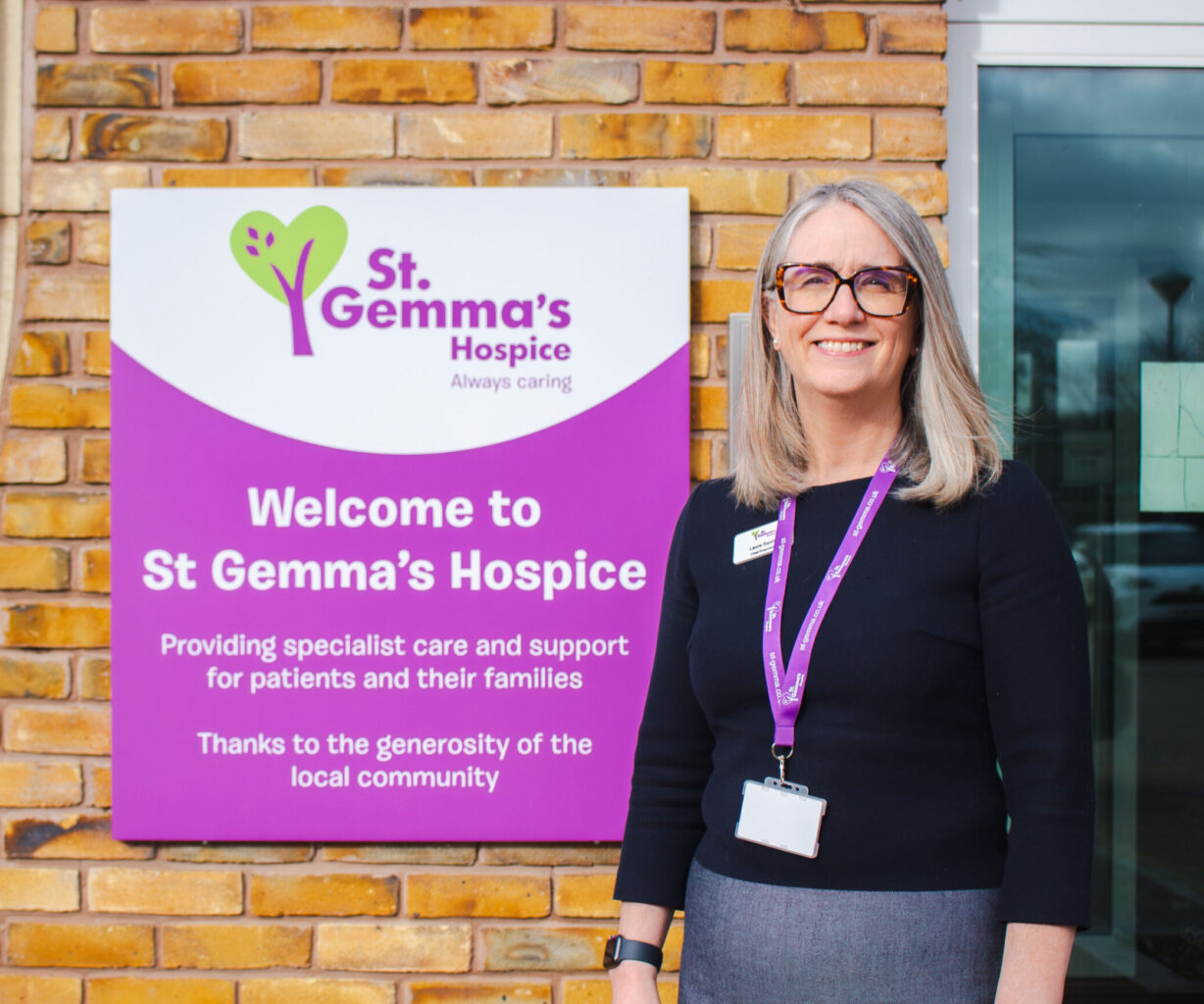
St Gemma’s Chief Executive, Laura Squire, shares her thoughts on why long-term, sustainable funding matters for all of us:
Hospice care matters to all of us. Some of us will need it ourselves or have a loved one who does. Others benefit indirectly from the specialist teams from hospices supporting people in their homes, care homes, through hospice out-patient and in-patient units, who take pressure off other parts of the NHS, allowing people to be discharged from hospital or to stay at home.
Building health and care services around the needs of local communities is a key pillar of the 10 Year Health Plan. At St Gemma’s we see this as an opportunity, to build on our existing partnerships with other service providers and create something that delivers even more for the people of Leeds. It is also a chance to bust some of the myths around hospices – that they are simply nice care homes where people spend their last days, that they are only about cancer, or that patients with very complex needs can only be looked after in hospitals.
The Terminally Ill Adults Bill has got people outside hospices talking more about death and dying. Whatever happens to that Bill, that is an important conversation to keep going. Palliative care is built around understanding what we want the end of our lives to be like, but also what is important to us for the life we still have.
Demand for palliative care is increasing, driven by an ageing population and more complex health needs. Marie Curie estimates that by 2050, around 40,000 more people, compared to 2025, will not get the palliative care they need, at a time when 75% of hospices are running a deficit and nearly six in ten have either already made or are considering cuts to frontline services. This is not all about more money. It is about understanding where to spend it in order to deliver real improvements for all of us. That is why we fully support the Hospice UK 4 point plan covering funding but also stronger accountability and a national equity framework.
We stand with those hospice leaders in Westminster today, including colleagues from across the West Yorkshire Hospice Collaborative, and thank them for taking our collective voice to Downing Street.